Linnea Jones – Realtor

Windermere Real Estate / Northeast, Inc.

Pests of all kinds are jealous of our lifestyles. They like our warm homes as much as we do so they try to get in. Wildlife also likes our manicured yards, bushes, trash cans and lush lawns so they move in close by for an easy meal.

Pest control experts advise we first ‘exclude’ pests from our homes before we resort to killing them. Here are some tips on common exclusion methods.

If you need help with pest control feel free to give me a call for a referral.


Pest exclusion

  • Rodents such as rats and mice can sneak into our homes through holes as small a ¼”. Check all crawlspace and attic vents for holes bigger than ¼” and cover with metal hardware cloth. Keep a rodent free perimeter around the home by cutting back foliage, picking up fallen fruit and pet waste and storing trash away from siding. Keep exterior doors closed. Rats can slip in undetected. Nearby attractions such as berry brambles should be removed as they are often good homes to rodents. Expect a surge of sightings after the bramble is removed.
  • Keep an eye on the roof eaves for wasp and yellow jacket activity. Clearing away a newly forming nest can be much easier than dealing with a whole hive later. Use a long stick, stream of water or broom to knock them down. One wasp is unlikely to attack but dozens will. Use caution, a fully formed nest will require other methods.
  • Ants need moisture and often find it in our crawlspaces where they can set up a nest and become a real problem. Check the crawlspace for moisture and perform the necessary repair(s) before the ants find the water source. Check the perimeter of the home for ant hills and treat with DTE (diatomaceous earth). DTE is not harmful to pets or humans but it sticks to the ants and they take it home to feed the queen thereby killing the colony.
  • Deer and rabbits often find a feast in our gardens and landscape. Many products exist such as repellants to keep them away. Repetition is required for effective treatment. Some require application daily for as much as a week (without rain) to re-train the animals. An alternative for rabbits involves trapping and relocation or motion detecting sprinklers that shoo them away with a quick spray of water.
  • Perimeter control of spiders and other insects can be achieved using sprays such as Ortho’s Home Defense to lay down a protective barrier around the home and windows. Nearby trees and structures like sheds and barns can be a haven for spiders. This can keep the local population high. Consider exterminating these attractions to increase your pest free perimeter.
  • Excluding politicians and the IRS are not covered in this advisory as there appears to no known (legal) method for exclusion.
Windy Winter

No comments

Windy Winter

Seattle area winters are known to be rainy and can be very windy. Along with the wind comes power outages that turn already dark days even darker and colder. Many homeowners have discovered the magic of the gas-powered generator. Ranging from small ones able to run a few lights to “whole-house” generators that keep the fridge and furnace going, generators are increasingly popular.

Unfortunately, generators can be very dangerous if not operated properly. Attached is a “top ten” list of do’s and don’ts for generator use.

If you need a service provider to help with your tasks just let me know. I love passing on the names of great people.


Generator Safety Precautions

Below is a brief list of safety precautions for using a gas-powered electric generator in a residential environment. For full instructions refer to the generators operating manual.

  • Prepare your plan of use prior to an emergency. Review all generator instructions and warnings. Practice starting the generator so you are aware of what it takes to properly start and run it.
  • Place the generator in a well-ventilated area, never indoors, in a garage or near an open window. Make sure your home has a CO detector installed. Carbon monoxide is a colorless / odorless gas that can easily kill. Point the exhaust away from the home.
  • Install battery operated lighting in the area of the generator so you can have both hands free while starting.
  • Place the generator in a dry area. Touching a wet generator can result in electrocution. Note: finding a dry area that is also safe for operation can be difficult. Consider building a generator shed to cover it during operation.
  • Prepare a fuel supply enough to carry you through a typical outage. Place the supply in a safe area. Never in a   garage or indoors.
  • Never fill the generator while it is running. Turn off the generator and allow it to cool down before re-filling. Consider a natural gas generator that can hook to the home’s natural gas supply for continuous function.
  • Never overload the generator. Match the required output to the capacity of the generator.
  • Never try to move the generator while it’s running, this can change the electrical output and damage equipment attached to it.
  • Connect the generator to the home’s electrical panel via a transfer switch professionally installed. This allows you to provide power to the whole house or selected circuits and switch from normal power to generator power.
  • Check all power cords for signs of failure including loss of insulation or aging. Never run a cord under a rug or pinch it in a door.

Fall Maintenance

Dear Friend,

Now that the leaves are falling, and rain is on its way its time to use the last days of sunshine to get our homes ready for fall and winter. Some exterior tasks will be very difficult to undertake once the days get shorter and rainfall begins. Here’s a list of outdoor maintenance items.

If you need a service provider to help with your tasks just let me know. I love passing on the names of great people.


Fall Outdoor Maintenance Checklist

  • Drain hoses and put them away.
  • Apply frost cover to all outside faucets.
  • Drain the sprinkler system. Have them professionally blown out.
  • Check foundation vent screens and window wells.
  • Move dirt and mulch away from siding allowing 6” clearance.
  • Plant for spring. Trees, shrubs and perennials like the water and cool temps to develop a good root system. Also, plant bulbs (note where you planted them).
  • Trim branches and check for ‘widow makers” (loose limbs) that could fall during the upcoming winds.
  • Make a mulch pile using grass clippings and leaves for use in spring.
  • Clean off the roof.
  • Remove loose moss gently (no pressure washing)
  • Apply moss killer
  • Check for loose shingles
  • Clean gutters
  • Check chimney for blockage and birds’ nests.
  • Check downspouts and assure water drains away from house.
  • Inspect siding for missing or failing caulk around doors and windows.
  • Winterize lawn mower and put away.
  • Clean and stow outdoor furniture.
  • Aerate, fertilize and overseed lawn.
  • Clean outdoor grill and cover.

First Impressions

Getting a home ready for market means helping the home be as attractive as possible to potential buyers. We’ve all heard about “first impressions” making a huge difference. The home should look its best and SMELL its best. This can be difficult to achieve if the home has been host to family pets. Pet odors can be extremely difficult to eliminate. Sometimes new carpet and fresh paint don’t achieve the desired results leaving faint yet noticeable odors. Pet urine can seep into walls and sub-floors.

Sometimes enzyme treatments do the job but most likely a more aggressive approach is necessary. Sometimes carpet must be removed and a sealer applied to the sub-floor. But not all sealers are effective. Here’s a quick run-down on the types of sealers and what to look for.


Sealers

Sealers vary in formulation depending on what is being sealed. A primer / sealer for drywall is quite different than one used to seal in odors on a concrete floor. Be sure to read the product brochure to ensure a proper outcome. Most paint manufacturers provide a variety of formulations. Common brands are Kilz and Zinsser.

Drywall primer / sealers are designed to prepare paper backed drywall to receive paint. A chemical reaction between the paper and sealer helps the paint to cover and adhere. These primers don’t block odors.

Bare wood primers are designed to block natural wood tannins from leaking through to the final coat of paint. Again no odor blocking.

Shellac is a resin made from secretions of the Lac beetle. When dissolved in alcohol shellac-based products leave behind a thin shell after the alcohol has evaporated. Excellent for sealing in odors or blocking stains. Shellac is even used in food products to provide a glossy shine. (M&M’s anyone?)

Varnish leaves a hard shell surface like shellac and is often used in creating water resistant coatings on floors and furniture.

Polyurethane is a modern plastic version that can be a water-based or oil-based product.

Lacquer is most often used in fine furniture and provides a high gloss coating.

Modern sealers can be formulated using a combination of the above. To properly seal a sub-floor with pet stains and odors I suggest first using an enzyme to eat away at the proteins then when dry use a thorough coating of either Zinsser Odor Killing Primer or Kilz Max stain and odor blocking formula. Both primers dry quickly and allow a top coating of oil or latex paint. Expect to spend around $50 per gallon.

Zappp!

No comments

Do you have a mystery switch in your house? A dead outlet or flickering lights? Don’t overlook symptoms of an ailing electrical system. Like all systems in the home, electrical devices and wiring can get old and cause problems or even become dangerous. Many homes have been remodeled by amateurs, handymen or the homeowner and dangerous conditions may exist. Even newly constructed homes may have unsafe wiring.

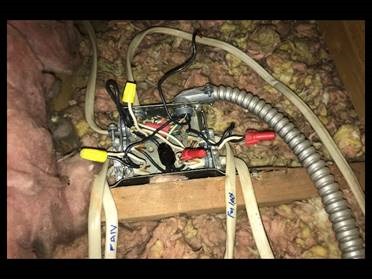
While remodeling our home we discovered that our ground system was “hot” which compromised the safety of the entire home. The picture below shows one box containing numerous wiring violations.

Attached is a checklist to perform your own brief survey but I suggest hiring a licensed electrician to perform a thorough survey and make any needed correction(s).

clip_image002


Brief Electrical System Survey

Not intended to replace a thorough survey performed by a licensed electrician. Never remove any safety cover from a panel, box or device, leave this to the professionals.

Electrical panel

o Is the cover firmly installed over the circuit breakers?

o Are any breakers loose or hot? *

o Are there any missing knock-outs in the panel cover?

o Is the brand name Zinsco? *

o Is the breaker box easily accessible?

*could be serious and need immediate attention

Outlets and switches

o Do all devices have covers?

o Are there any mystery switches?

o Do switches feel loose or sloppy?

o Do outlets have broken faces or plugs fall out easily?

o Do outlets within 6’ of a sink have GFCI?

o Do exterior outlets have “bubble” covers to protect from weather?

Lights

o Do ceiling lights have incandescent bulbs over 60W?

o Do any lights flicker?

o Do fixtures have the wrong style of bulb installed?

o Are exterior lights properly sealed against the siding?

Attic

o Do any wires travel over the top of a joist?

o Are there any wires connected outside of a junction box?

o Are all junction boxes covered with the appropriate cover?

o Do you see any bare or frayed wires?

Garage or outbuilding

o Are extension cords used as permanent wiring?

o Are garage door openers powered by extension cords?

If answering Yes to any of the above questions, consider hiring an electrician.

Some items like light bulbs and switch covers can be corrected by the homeowner.

Remember electricity is a shock hazard and a fire hazard.

Spring Shred!

Spring is here! Following a long, dark and wet winter, the urge-to-purge can be a natural response. The questions of what to keep and what to toss can stifle the urge especially when it comes to our most important documents.

Our annual SHREDDING Event is a great opportunity to securely eliminate the backlog of paperwork. Attached is a handy reference for what to select.

Please note our event is also a RECYCLING event allowing you to declutter from the rest of the house including electronics and small appliances. I hope to see you there!


Should I keep or should I shred?

It’s tax time and you have piles of paperwork assembled, your filings are complete and now the question comes; what I should keep, what should I shred and what can I just throw in the recycle bin? Here are 3 things to keep, 3 things to shred and 3 things you should strongly consider shredding.

Keep

• Tax Returns. Some say for 7 years, but the conservative answer is that you may want to keep them longer – even forever. You may need to file an amended return. If you’ve claimed a loss, be sure to hold onto the supporting paperwork.

• Property Records. Retain all property records as long as you own the property. These include closing statements and receipts for home improvement. Retain even after a property sale until the period of limitations ends. You’ll need them to calculate depreciation and determine your gain or loss. Keep them safe in a secure spot.

• Home or Business Office Improvements. If you own your office, this applies to you as well as homeowners. Keep track and keep records regarding improvements. They may reduce your capital gains tax when you sell.

Shred

• Receipts. Unless a receipt is being kept because it’s deductible or because the item purchased is under a warranty, shred it. Reconcile your receipts with your bank and credit card statements and send them to be destroyed; don’t put them in a drawer. This is true for both individuals and businesses.

• Estimates and Notes. You don’t need to keep the notes you made at a meeting once you are done with the project and you don’t need to keep estimates after you have made a purchasing decision. Just remember these documents may have information about you or your business that could fall in the wrong hands – destroy!

• Personal letters and cards. Keep the ones that you want to reread time and time again, but you don’t need to keep every letter or memo you receive – or every birthday card. Most can probably go in the trash, but if, again, they have information you want to protect, shred them.

Consider

• Travel Itineraries. You’ve gone on that vacation or business trip so why not throw them in the trash? Itineraries could include more personal information than you want in a garbage can. Of course, keep the receipts needed for taxes if it’s a business trip, but shred the itinerary and any used tickets.

• Credit Card “Junk” Mail. Business or individual, open it! If it’s a pre-approved offer or has usable checks on your account, don’t just tear it in half and dump it. Get it to the “shred it” pile.

• Documents with Your Maiden Name or Your Mother’s Name. Any document with your maiden name or your mother’s maiden name should be shredded. This is a common security question used by financial institutions so keep it to yourself. Shred it.

Moles

No comments

Moles !!!

If you live in Western Washington you’re likely familiar with mole hills. Moles seem to thrive in our area infesting lawns in nearly every neighborhood. They like to burrow under the best lawns and leave the unkempt ones alone. Green lawns mean there’s a healthy environment for worm growth – and moles love juicy worms. Where there’s a surface mound there’s an amazing labyrinth of tunnels as deep as 6 feet below featuring rooms for birthing, sleeping and food storage. Moles are amazingly adapted to their environment.

Getting rid of moles isn’t the easiest thing. There are numerous techniques including trapping and poisoning. I’ve attached a summary of methods. If you are frustrated trying these yourself feel free to give me a call for a referral to a specialist.


Mole Extermination

  • The water method. Logic dictates that one should be able to drown moles by flooding their tunnels with a garden hose. This technique is rarely successful. Moles deal with water all the time and build escape pods in which to hide until the flood subsides. Then they go about the business of tunnel-construction for the sole purpose of raising more youngsters and getting at those juicy worms and grubs.
  • The dog method. If you are lucky to have a dog that likes to hunt they will sit still waiting for a mole to emerge from a newly formed mound. They will pounce and dig like crazy and sometimes be successful at capturing the mole. They will have successfully doubled the damage to the lawn and perhaps delivered a lovely rodent to their master.
  • Poisons and bait. These methods work quite well once you master the techniques of properly placing them. Baits need to be placed within the tunnel which requires skillful digging to locate the small earthen bores. Caution should be used not to allow other animals or pets to access the poison. One needs to study the patterns of mounding and tunneling to avoid wasting bait and poison. Studying the moles will allow one to identify the active areas. Most baits are applied to the tunnels between mounds.
  • Electronic chasers. A variety of electronic devices are available that promise to “annoy” moles into retreat by using low and high frequency pulses outside the range of the human ear. While these devices may chase them away for a time (likely into your neighbor’s yard), their tunnels (infrastructure) remain and as soon as the device is removed the moles move back in.
  • Repellants and Insecticides. If you have a small yard, you may consider applying repellants in the form of liquids or pellets. These products claim to make the worms and grubs taste bad and the moles move on. A home remedy includes the use of castor oil. These products need to be re-applied frequently especially during rainy periods or on lawns that are irrigated.
  • Traps. A variety of traps have been invented to physically kill moles. Generally, these traps need to be installed below ground and depend on a trigger activated when moles move through their tunnels. Live traps are not practical. Setting traps involves a significant commitment to studying mole tunneling habits and plenty of trial and error as one develops the proper skills. Note: Washington State passed a trapping law that inadvertently made trapping moles illegal. This has since been tested and trapping has resumed relying on the fact that moles are considered rodents.
  • Web Apps. We can only wish!

Snow !

No comments

Snow!!!

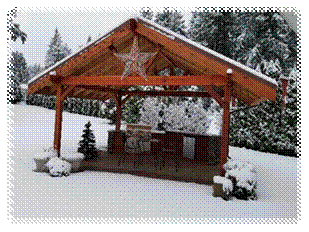
I was delighted to see snow on Christmas Day! There’s just something magical about the quiet blanket of freshness that completes the winter atmosphere.

I love playing in the snow and I want it to last forever, but my husband (Mr. Scrooge) sees the practical side and immediately starts thinking about the impact on the house, landscape, walkways, and driving.

The end of January and early February are often times when we get another snow storm so here’s his list of suggestions from our favorite landscape designer / contractor Jim Reynolds.

clip_image002

Oh, By the Way… If you or someone you know would like help buying or selling a home or just needs feel free to give me a call.


Heavy Snowfall Tips FROM JIM REYNOLDS

  • When shoveling and removing snow from your ornamental trees, use a broom or like tool and GENTLY remove any heavy snow. To NOT “whack” the branches; Shake them gently from the bottom. Evergreen magnolias and Maples are especially susceptible to damage from snow.
  • When removing snow, be aware of the temperature. Snow is much LIGHTER when it is below 32 degrees. Don’t wait until it warms up!
  • When studying the forecast, be aware of the longevity of the weather pattern. If it is going to clear off and then go into a DEEP FREEZE, remove snow now and apply snow melting granules to the pavement.
  • When walking on the fresh snow, remember that once the snow gets compacted on the walkway and it freezes again, it will become chunky ice and be difficult to remove. Shovel the snow early on!
  • When driving somewhere, allow plenty of time
  • Work from home if this is possible
  • When anticipating a snow storm, be PROACTIVE and to consider the following:
  • If your driveway slopes uphill, back your car into the garage, so you don’t have to spin your way out backwards in  the morning. Take note of ALTERNATE driving routes in your area
  • If you have snow melting granules confirm that they are concrete safe. Spread them on the walks and driveways before the storm. Even when it snows, this may keep the surface from freezing beneath the snow. Commercial properties do this to keep parking lots and walkways safe.
  • Stock up on groceries, water, candles, batteries and other essentials BEFORE the big storm hits.
  • Check in with your loved ones and neighbors. This can be a good time to connect with others.
  • Remember ALL WHEEL DRIVE vehicles slide just like two-wheel vehicles. Next time you drive in foul weather, count how many 4 x 4’s are in the ditch. It will surprise you.

Water Intrusion!

Welcome to Fall, a season of enchantment and … water!

As the Fall and Winter rainy seasons approach it’s a good time to get the home ready for all that rain snow and ice. A quick inspection of the home can help avoid damage and costly repairs.

The next page has a few pointers on how to identify a water problem before it does more damage.


Water intrusion inspection guide

Water leaks can be subtle. Sometimes it requires a specialist with specific tools and knowledge to track them down but most can be detected by the average homeowner, you just need to know where to look. Here are a few tips.

Roof. If you can safely climb on the roof, look for the obvious; broken or lifted shingles, depressions and nail pops. Degranulation is a sign of an aging roof that may not be performing due to age. Examine flashings around vent pipes and chimneys. A build-up of moss can hold water and give it a chance to leak through.

Gutters can leak just about anywhere. Examine their entire length and all elbows and couplings. Look for rusted through areas or streaking. Check to see if downspouts direct water away from the home or into the drain. A simple missing downspout can cause serious damage in a short time.

Windows & doors. Check the perimeter of each to see if the caulking is complete, not cracking or missing. Open and close all windows to ensure they operate and close completely. Check the sweep at the bottom of all exterior doors.

Siding. Check seams for proper caulking. Make sure all components are firmly installed. Look for swelling at edges of composite siding and make sure there’s a good coat of paint to seal the body.

Crawlspace. Look for standing water. The existence of water may be normal in some crawlspaces but should be covered with the vapor barrier. If accessible, examine the plumbing pipes for leaks. If a sump-pump is used, ensure it is operational. Look for staining on pier posts. The presence of small ants can be a sign of a leak.

Faucets, sinks & toilets. Open the cabinets under sinks and feel for dampness. Using a dry paper towel wipe along the pipes to reveal water. If condensation is present consider that humidity is high either due to weather or high moisture in the home due to a leak. Check the area around faucets for water leaking into the cabinet. Check the shut-off area of toilets. Check seals around tubs and showers.

General. Shut off all water use in the house, check the meter and if it’s still running you have a leak somewhere.

Market update

In his latest report Windermere Real Estate’s Chief Economist Matthew Gardner presents an optimistic view of our economy and the real estate market.

I believe that growth in the State will continue to outperform the U.S. as a whole and, with such robust expansion, I would not be surprised to see more people relocate here as they see Washington as a market that offers substantial opportunity.

Below is a summation of his report. If you would like to view the entire report please contact me.


clip_image002

Excerpts from Matthew Gardner’s

2017 2nd Quarter Economic Report


General Washington Economy

· Washington State’s economy is rapidly expanding. Expecting the State will add around 70,000 new jobs in 2017.

· Unemployment continues to fall to the lowest rate (4.5%) since 1976. Growth will continue and outpace the U.S.

· Incomes will grow. Expecting faster income growth in the 2nd half of the year.

· More in-migration. More people will move here to take advantage of our job market and lifestyle.


The Real Estate Market

· The overall number of homes on the market remains constrained. A decline of 20.4% from the same quarter in 2016.

· Home prices continue to rise. Average Year over Year increases rose 14.9% with an average price of $470,187.

· Interest rates remain at historical lows.

· Market times continue to drop. In King county, the average home sold in 15 days (18 days faster than in 2016).

· Supply of homes is the driver. Given the constraints of government regulation, lack of developed land and availability of workers, homebuilders can’t build enough homes to keep up with demand.

· It’s clearly a ‘sellers market”. Inventory is short and buyers are plentiful. This should remain for the rest of the year.


ABOUT MATTHEW GARDNER


Matthew Gardner is the Chief Economist for Windermere Real Estate, specializing in residential market analysis, commercial/industrial market analysis, financial analysis, and land use and regional economics. He is the former Principal of Gardner Economics, and has more than 30 years of professional experience both in the U.S. and U.K.